Open four tabs and search the same three words: Toledo home prices. Zillow will tell you the average home value sits at $113,873. Redfin will tell you the median sale price is $140,000. A flat-fee listing site will tell you it's $154,400. A fourth will show a median list price of $135,000. All four are current. All four are Toledo. None of them tell you what you're actually going to pay for a house in the neighborhood you're looking at.
That's not a data error. It's a math problem, and once you understand it, the citywide number stops being useful and the neighborhood number starts doing the real work.
Four Tabs, Four Numbers, One City
The reason these figures disagree isn't that someone got it wrong. They're measuring different things. Zillow's figure is an estimated value across every home in the city, not just the ones that sold. Redfin and similar sites report the actual median sale price over a rolling three-month window, which moves with whatever mix of homes happened to close. A listing site's median reflects asking prices, not closing prices, which can run higher or lower depending on how aggressively sellers are pricing that month.
Here's what each was reporting recently, with the window each one covers:
| Source | Metric | Figure | Window |
|---|---|---|---|
| Zillow ZHVI | Average estimated home value | $113,873 | As of late June 2026 |
| Sale-price index (3-month rolling) | Median sale price | $140,000 | 3 months ending May 2026 |
| MLS-based listing service | Median sale price | $154,400 | June 2026, year-over-year |
| List-price aggregator | Median list price | $135,000 | July 2026 |
A citywide number smooths all of that into one figure, which is exactly the problem. Toledo doesn't have one housing market with some noise around the edges. It has several markets that happen to share a city limit, and a citywide median can mask their differences.
Toledo Is Not One Market. It's At Least Four.
Look at the available figures at the neighborhood level and the spread stops looking like noise and starts looking like the actual story.
Old Orchard, the neighborhood wrapping the University of Toledo and Westgate shopping area with easy access to I-475, posted a median sale price of $273,000 over the three months ending March 2026, essentially flat year over year, with homes taking an average of 56 days to sell.
Downtown Toledo showed a median sale price of $277,000 over the three months ending May 2026, down about 9 percent from a year earlier, with homes selling in 44 days on average. Only four homes closed in May, a small monthly sample that can make month-to-month figures sensitive to which properties sell.
Point Place, the lake-adjacent neighborhood on the city's north end, listed at a median of $159,000 in May 2026.
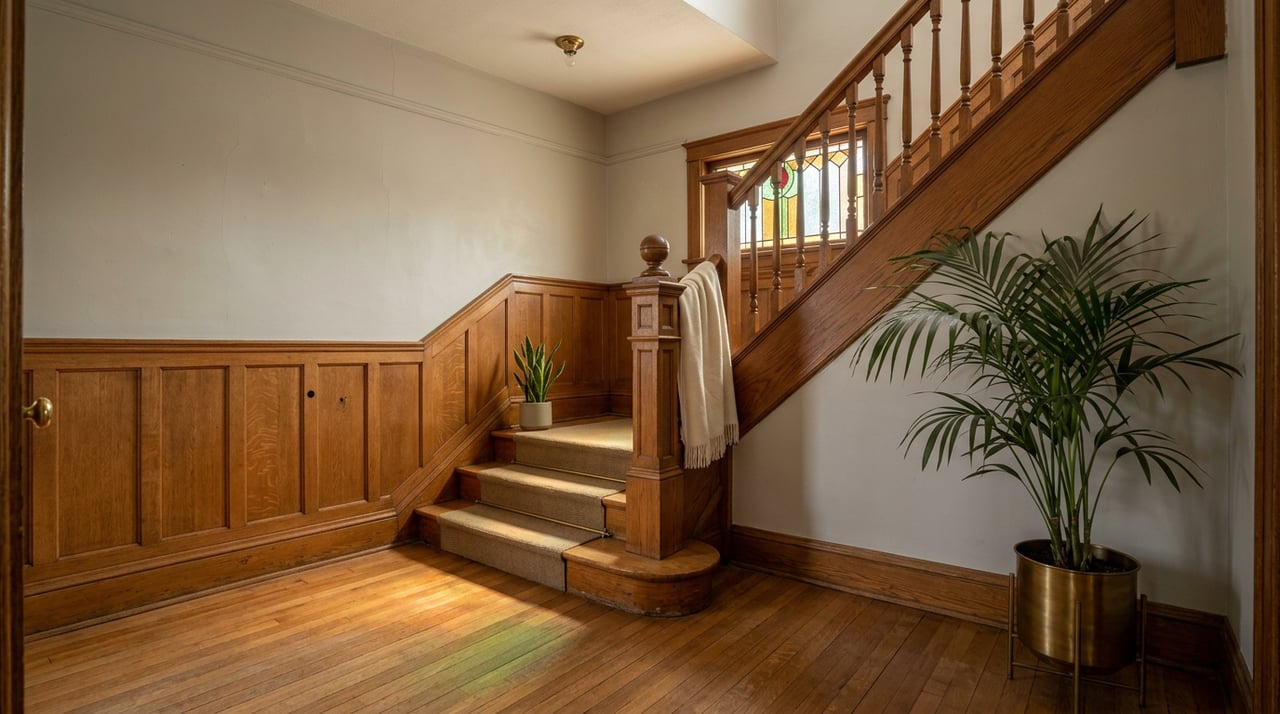
Old West End, Toledo's grand historic district built around the Toledo Museum of Art and known for architecturally significant homes from the early 1900s, showed a median list price of just $99,900 in June 2026, down 7 percent in price per square foot from a year earlier.
That last number is the one that should stop a buyer scrolling. A neighborhood anchored by a major art museum, full of homes with original hardwood floors and stained glass, showing a median under $100,000? That's not a typo. It's a signal that the median in Old West End is hiding two very different markets living inside one neighborhood boundary.
WTOL reported in January 2026 that a local Toledo agent put the citywide spread in plain terms.
Turner explained the average home price in Toledo currently sits between $165,000 and $170,000, while Lucas County averages closer to $200,000.
Rick Turner of Key Realty was speaking to WTOL about the city overall, and while a few months have passed since that interview, the same principle scales down just as well today. If the county average and the city average are already $30,000 to $35,000 apart, the gap between Old West End and Old Orchard, two neighborhoods a few miles apart, should surprise nobody.
What the Old West End Number Is Actually Hiding
Old West End's low median isn't a bargain signal. It's a blend. The neighborhood contains fully restored Victorian and Edwardian homes that sell in the $200,000-plus range, sitting a few blocks from properties that have sat vacant or under-maintained for years and trade for a fraction of that. One recent Old West End sale, a three-bedroom home on N Detroit Avenue, closed in April 2026 for $26,667.
Put that sale next to a restored five-bedroom Old West End home a few blocks away, and the median across the neighborhood can describe neither property. That's the mechanism. A median is more useful for comparing properties when the homes feeding into it are reasonably similar. In a neighborhood where the housing stock ranges from move-in-ready architectural landmarks to properties needing a full gut renovation, the median alone may not describe the kind of house a buyer is looking for.
For a buyer, this means the Old West End number isn't a starting point. It's a warning to ask a different question: which slice of this neighborhood's inventory are you actually looking at, and what did comparable homes in that slice sell for.
Downtown's Small-Sample Problem
Downtown Toledo's median tells a different kind of cautionary story. Four homes sold in May, but the reported median covers the three months ending May. The May count alone does not establish how much the monthly mix influenced the three-month figure. The 9 percent year-over-year decline reported for the three months ending May 2026 might reflect a genuine softening in downtown condo and loft demand, but the four May sales alone do not show what drove the three-month change.
This is worth knowing before anyone treats a downtown price drop as a buying signal or a downtown price jump as proof of momentum. The three-month figure and the May sales count are context, not a guarantee of future prices.
How to Actually Use These Numbers
None of this means Toledo's price data is unreliable. It means the citywide figure is the wrong altitude to make a decision from. A few practical adjustments make the data usable:
- Ask which metric you're looking at. A median sale price, a median list price, and an estimated average value answer three different questions and should never be compared directly against each other.
- Ask how many sales fed the number. A neighborhood median built on 40 sales a quarter is a different kind of evidence than one built on four.
- Ask what's inside the range, not just what the middle looks like. In a neighborhood like Old West End, the low and high ends of the range matter more than the median between them.
- Compare like to like. A 1920s four-bedroom near the Toledo Museum of Art shouldn't be priced off a citywide median that includes lake-view ranches in Point Place and studio condos downtown.
Toledo's national ranking is real, and the underlying affordability story holds up. The mistake is assuming that story applies evenly across every block in the city. It doesn't, and the neighborhoods above are the proof.
FAQ
Why do Zillow, Redfin, and other sites show different numbers for the same city? They measure different things. Some report an estimated value across all homes (sold or not), some report the median price of homes that actually closed over a rolling window, and some report asking prices rather than sale prices. None of them are wrong. They're answering different questions.
Is a low median price in a neighborhood like Old West End a sign that homes there are undervalued? Not necessarily. A low median in a neighborhood with a wide range of home conditions usually means the number is being pulled down by distressed or lower-end sales mixed in with higher-end ones, not that every home in the neighborhood is priced that low.
How many sales does it take before a neighborhood median is trustworthy? There's no universal cutoff, but a monthly figure built on three or four sales should be read as a data point, not a trend. Looking at a rolling three-month or six-month window, and checking the sales count behind it, gives a more stable picture.
If you're comparing Toledo neighborhoods and trying to figure out what your budget actually buys once you get past the headline median, that's exactly the kind of block-by-block read that benefits from someone who tracks these numbers locally rather than relying on a single portal's citywide average. Chirley Lima works across Toledo's neighborhoods every week and can walk you through what the current data means for the specific pocket of the city you're considering. Book A Consultation to start with a number you can actually use.
