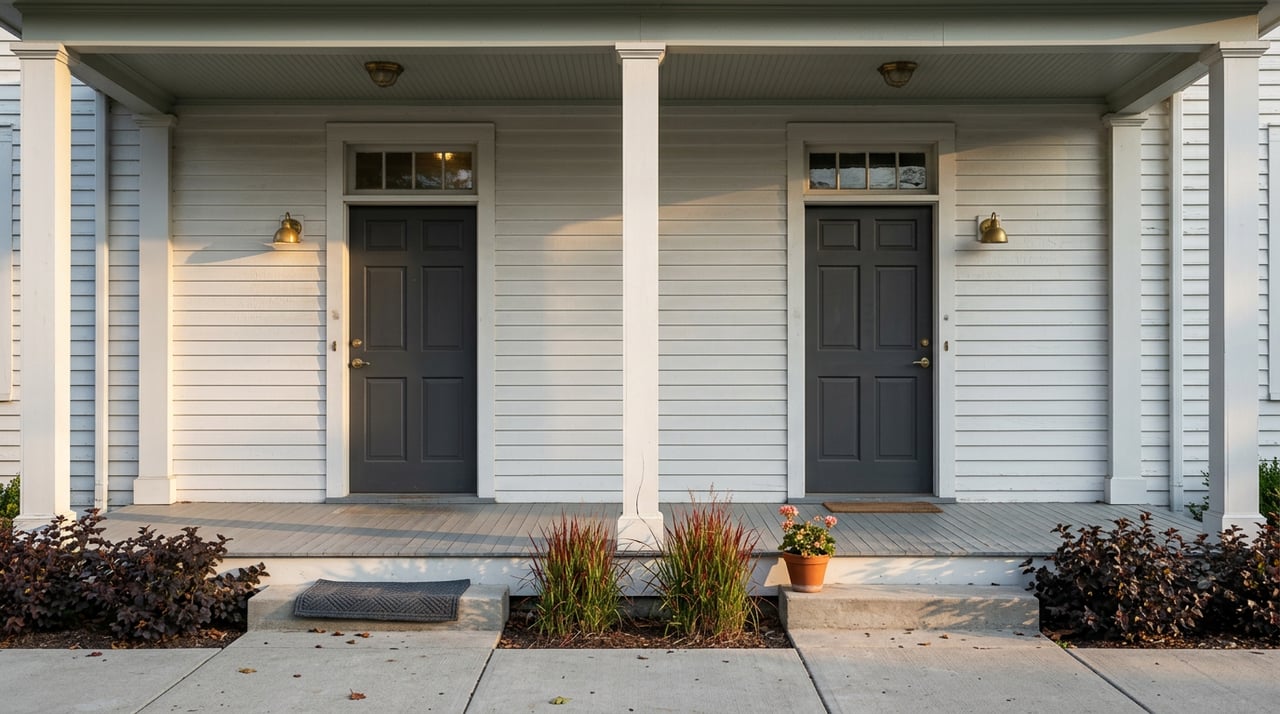
Say you just closed on a Toledo duplex through an estate sale. The seller's attorney told you no disclosure form was needed because the transfer went through probate. You took that at face value, budgeted for a quick rehab, and figured the paperwork side of the deal was settled the day you got the keys. What you actually inherited is narrower than that, and the part you didn't inherit is the part that determines when you can legally collect rent.
Two separate rules govern a rental purchase like this in Toledo, and investors routinely collapse them into one. The first is a state disclosure statute with a short, specific exemption list. The second is a city ordinance that certifies a property, not a person, and resets every time the deed changes hands. Clearing the first tells you nothing about the second.
The Exemption You Think You Have
Ohio Revised Code 5302.30 requires anyone transferring one to four dwelling units to complete the state's Residential Property Disclosure Form before the buyer signs a purchase contract. The statute has been on the books since 1993, and it does not carve out an exception for investors, absentee owners, or anyone who never lived in the property. That exemption does not exist. What does exist is a short, specific list: court-ordered transfers such as probate or bankruptcy, deeds in lieu of foreclosure, transfers by a fiduciary administering an estate or trust, foreclosure sales themselves, transfers between co-owners, and new construction that has never been occupied.
An estate sale can genuinely qualify, which is why the attorney in the scenario above wasn't wrong. But "I'm just an investor" and "the seller never lived here" are not on the list, and Ohio real estate attorneys who track disclosure disputes have specifically flagged both as misconceptions that show up again and again in practice. If the exemption doesn't actually apply and the form isn't delivered before the contract is signed, the buyer gets a statutory right to rescind, no proof of damages required, within three business days of finally receiving the form or thirty days of signing, whichever comes first. That is not a technicality worth discovering after you've already put money into a rehab budget.
Where the Real Traps Sit
The categories that do exempt a transfer share one thing in common: the transferor genuinely has no way to know the property's condition. A bankruptcy trustee never lived there. A lender that took a property back in a deed in lieu of foreclosure never lived there. An executor settling an estate often never set foot inside. That's the logic behind the exemption. It protects people with no firsthand knowledge to disclose. It was never built to protect buyers from having to look closely at what they're purchasing.
Even when an exemption legitimately applies, it only removes the obligation to fill out the form. It does not authorize anyone to hide a known defect. Sellers who know something specific and material and say nothing anyway can still face a fraud claim regardless of which box they checked.
Toledo's Second Layer, and Why the Finish Line Moved
Separate from any of that, Toledo Municipal Code Chapter 1760 requires every 1-4 unit residential rental built before 1978, along with family child care homes of the same vintage, to hold a Lead-Safe Certificate. The certificate requires a visual inspection and a dust wipe test performed by a local lead inspector, and it's tied to the property's census tract on a phased schedule.
The city's original 2021 announcement described this as a five-year rollout, with the earliest and highest-risk tracts certified by June 30, 2022, and every remaining tract compliant by December 31, 2026. That date has circulated widely enough that plenty of Toledo landlords treat it as the deadline. It isn't, not anymore. The phase map posted on the city's own Lead Safe Toledo site has since been updated, and the schedule now runs well past that original endpoint. Some tracts already faced a December 31, 2025 deadline, and Notice of Violation letters went out to non-compliant owners in those tracts in January 2026. Other tracts had until June 30, 2026, a deadline that's already come and gone as of this writing. A further group is due by the end of this year, on December 31, 2026, and the schedule now extends in additional phases through June 30, 2029, for the lowest-risk tracts.
What this means practically: the deadline that matters for any given property depends entirely on where it sits, and a buyer who assumes "2026" is the date for everything is working from an outdated headline. Before writing an offer on a pre-1978 Toledo rental, look up the property's census tract through the Auditor's property search and check it against the current phase map rather than relying on what a well-meaning article said a few years ago.
The Deed Doesn't Carry the Certificate
This is the piece that catches BRRRR buyers who did everything else right. A Lead-Safe Certificate is valid for five years from the date of the local lead inspection. That sounds like a long runway. It is not a runway for a new owner. According to the city's own guidance, when a certified rental property is sold or transferred, an updated certificate must be issued in the name of the new owner. The certificate belongs to the ownership record, not the building.
That means a seller's unexpired, five-year-old certificate does not carry forward automatically. A buyer who closes on a Toledo duplex assuming the previous owner's paperwork covers them for years is working from the wrong assumption, and the gap surfaces at exactly the moment it's most expensive: when you're trying to place a tenant and can't legally do so until the certificate reissues in your name.
This applies regardless of whether the disclosure exemption applied to your purchase. A foreclosure-exempt transfer and an arm's length purchase both hit the same wall on the lead-safe side. The two systems don't talk to each other, and the certificate resets at closing either way.
Why the Registry Is the Backbone Underneath Both
Both the disclosure question and the lead-safe question eventually route through the same office. Every residential rental property in Lucas County must register with the County Auditor under Ohio Revised Code 5323, a requirement that predates Toledo's lead ordinance and applies whether or not the property was built before 1978. The city's lead-safe program piggybacks on that existing registry: a Lead-Safe Certificate application can't move forward until the property is registered, and enforcement of both requirements runs through the same Division of Code Enforcement.
A few practical details matter here. There's no filing fee to register with the Auditor. Owners have sixty days after a transfer to register or update the record, including changes like moving a property into an LLC. Since October 2024, a designated property manager can file on an owner's behalf, which matters for anyone building a portfolio from out of state. Registering isn't the finish line either. It's the prerequisite that unlocks the actual certificate application, which carries its own $25 fee and a requirement to submit a lead-safe report within six months of filing.
The city has also moved toward a broader inspection-based approach to rental oversight this year, with a January 2026 council proposal to license and inspect apartment complexes of forty units or more. That effort targets large multifamily buildings specifically and doesn't change anything for a small landlord with a duplex or a single-family rental, but it's a sign of where enforcement attention in Toledo is headed overall.
Sequencing the Paperwork Before You Close
For a rental purchase, the order that protects you looks like this. Confirm whether a real exemption applies to your specific transfer type before assuming the disclosure form isn't required. If the property was built before 1978, look up its census tract and check the current phase deadline rather than the 2026 date most people remember. Assume you will need a fresh Lead-Safe Certificate in your own name regardless of what the seller held, and budget the inspection and any remediation into your renovation timeline rather than your closing costs. The city has previously offered an Early Bird Matching Grant, funded through a federal Community Development Block Grant, reimbursing up to $5,000 per unit for owners who get compliant ahead of their tract's deadline. Confirm whether that program is still funded before assuming you'll cover the full cost yourself.
None of this is a reason to avoid Toledo's older rental stock. It's a reason to build the compliance sequence into your offer timeline the same way you'd build in an inspection contingency or a financing deadline. The properties that make BRRRR math work in this city are disproportionately the ones built before 1978, which means this exact sequence applies to a large share of the deals worth chasing.
Three Things to Settle Before You Sign
Does an estate or foreclosure exemption actually cover my purchase? Check it against the specific list in ORC 5302.30 rather than assuming investor status alone qualifies.
What phase is this property's census tract in right now? The 2026 date everyone remembers only applies to one group of tracts. Others already passed their deadline and some run to 2029.
Did the seller's certificate transfer with the property? It didn't. Plan for a new inspection and a new certificate issued in your name no matter what the previous owner held.
Getting this sequence right before you write an offer is exactly the kind of groundwork worth having a strategy for, especially if this is your first rental purchase in the city or your fifth. Chirley Lima works with investors building rental portfolios across Toledo and Northwest Ohio, including the compliance and BRRRR planning that goes into a deal before it ever reaches a closing table. Book A Consultation to walk through what a specific property's timeline looks like before you're locked into a contract.
