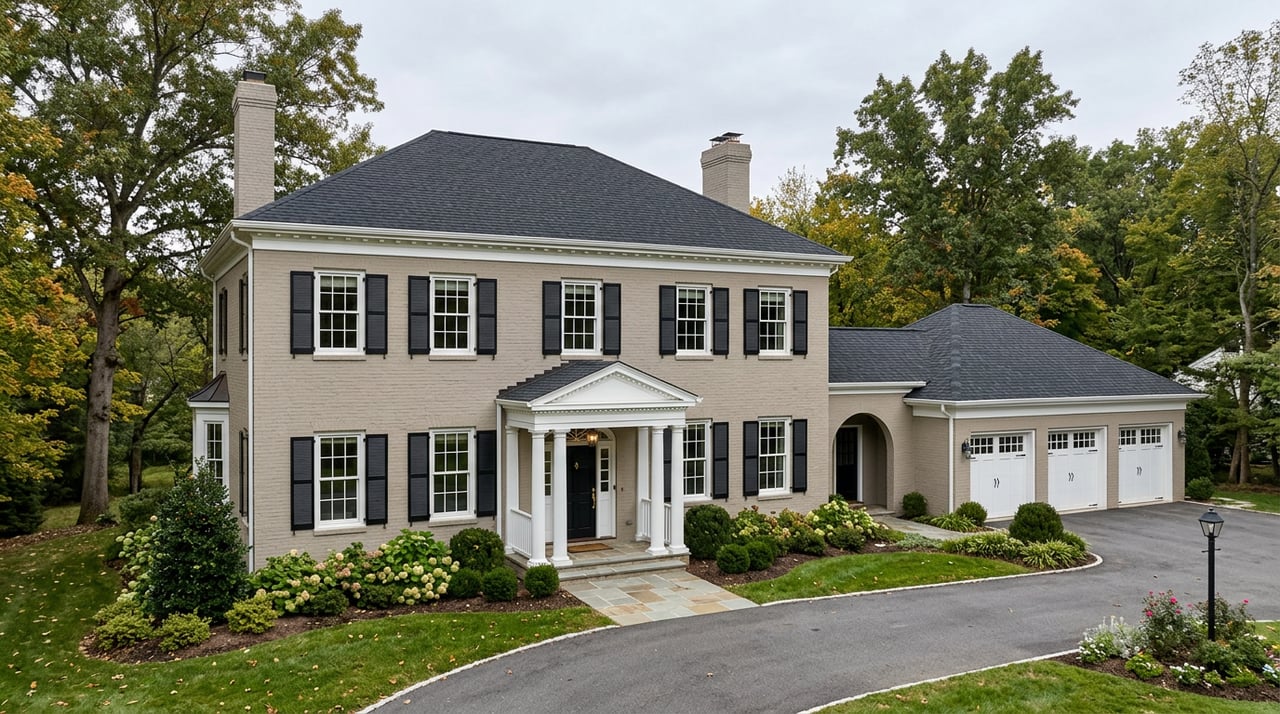
Drive south on Fulton-Lucas Road through Swanton and you will not see a sign, a fence, or a change in pavement marking where Fulton County ends and Lucas County begins. The road just keeps going, past the Mail Pouch Saloon, past ranch homes with matching mailboxes, past lawns mowed on the same Saturday schedule. Nothing about the street tells you that a house on one side and a house on the other could face two entirely different sets of rules the moment either one goes up for sale.
That difference lives underground, in the septic tank.
Swanton is one of the few communities in Northwest Ohio that sits inside two counties at once. The village charter says so plainly: Swanton spans both Fulton and Lucas counties, and has for longer than most residents have lived there. For most day-to-day purposes, that split is invisible. Trash pickup works the same. School enrollment works the same. But for anyone selling or buying a home with a private septic system or well, which side of that line a parcel falls on changes what has to happen before the deal can close.
One state law, two very different local answers
Ohio regulates household sewage treatment systems under a statewide rule, Ohio Administrative Code 3701-29, adopted in 2015 and updated again in July 2021 with stricter soil evaluation standards. That much is consistent everywhere in the state. What the state law does not standardize is what happens at the point of sale. Local health districts were given room to write their own supplemental policies, and they used it. A March 2026 review of Ohio's septic landscape counted 88 counties now running their own point-of-sale inspection programs, each with different timelines, fees, and pass or fail criteria. Two counties sharing a village name can land in very different places.
Fulton County landed on the stricter end. The Fulton County Health Department states plainly that any private sewage disposal system or water well on a property being sold in the county must be evaluated by the health department before the sale, and the requirement extends to every well on the parcel, including ones that have not been used in years. An old, capped well that nobody thinks about still has to be accounted for.
Lucas County built something different. The Toledo-Lucas County Health Department oversees more than 12,000 household sewage treatment systems across the county and, per its own published materials, has run an Operation and Maintenance program since January 1, 2016, when the statewide rule first required every Ohio health district to stand one up. Nothing on the department's own site spells out a blanket pre-sale field inspection the way Fulton County's page does. General septic-service guidance covering the county puts it more cautiously: a sewage system evaluation is commonly expected during a real estate transaction, and buyers should confirm the current point-of-sale requirement before closing, because these programs change. That is a meaningfully softer, less codified standard than Fulton's unconditional "must be evaluated."
Put those two policies side by side and you get a real gap.
| Fulton County side | Lucas County side | |
|---|---|---|
| Pre-sale trigger | Mandatory evaluation of every septic system and well before sale | No blanket pre-sale mandate spelled out in the department's own materials |
| Who inspects | Fulton County Health Department | Registered service provider, per general guidance for the county |
| Unused wells | Must be evaluated or addressed even if not in use | Not addressed the same way in public materials |
| What to confirm | Schedule the evaluation before listing | Call the health department to confirm the current point-of-sale expectation |
That is not a hypothetical difference. It is the difference between a seller who needs to schedule a health department visit weeks before listing and a seller whose main job is picking up the phone to find out what, if anything, is expected before this specific closing.
Why the ground itself adds a second layer
Swanton takes its name from Swan Creek, and the soil across this stretch of Lucas and Fulton counties is not uniform either. Contractors who work the wider area describe ground that shifts from sandy soil near Oak Openings Preserve to heavier clay closer to the Maumee River, changes that matter for how a drain field behaves. Septic and well contractors who work the area, including Mastin Septic and Well Service out of nearby Whitehouse and Automatic Septic and Well Inc., which has served Swanton and the greater Fulton County area for nearly eight decades, size up a system differently depending on which soil it sits in, because a drain field in heavy clay ages on a different schedule than one in sandy ground.
None of that changes which county's health department you call. But it does mean a system that passed its last inspection with no issues in one soil type might show wear sooner in another, which is one more reason not to assume last year's paperwork tells the whole story.
Not every parcel in the village straddle is settled ground, either. A 2019 report in the Swanton Enterprise on a village council vote to conform township boundaries noted that the village at the time sat across three townships, including Swanton Township on the Lucas County side, and that residents across those townships paid township levies on top of village ones. Boundaries in this area have moved before through annexation and conforming agreements between the village and its neighboring townships. The takeaway for a seller is not that the map will change again tomorrow, but that the map has moved before, which is exactly why guessing which county a parcel sits in is a bad habit worth breaking.
What this means if you are getting ready to list
The first step costs nothing and takes five minutes. Fulton County and Lucas County each maintain a public auditor's parcel search, and typing in an address will confirm which county holds the record for a given property. That single lookup determines the entire path ahead.
If the parcel sits in Fulton County, budget time for the mandatory health department evaluation before you set a listing date, not after an offer comes in. If a system needs repair to pass, Ohio's general practice allows a repair window in the range of 60 to 90 days, or an escrow arrangement where buyer and seller split the cost, according to the same March 2026 review of statewide septic rules. That is a general Ohio pattern, not a number specific to Fulton County, so confirming the current timeline with the health department directly is worth the phone call.
If the parcel sits in Lucas County, the more useful first move is calling the Toledo-Lucas County Health Department directly and asking what, if anything, it expects to see before this specific sale closes. The department's own materials describe the Operation and Maintenance framework it has run since 2016, but they stop short of publishing the kind of blanket pre-sale rule Fulton County spells out, so getting a direct answer in writing is worth the phone call, ideally before a buyer's agent asks the question first.
A few questions worth settling early
How do I find out which county my Swanton home is actually in? Both the Fulton County and Lucas County auditor sites offer free parcel lookups by address. That confirms jurisdiction faster than guessing from a mailing address, since Swanton addresses do not sort neatly by county.
Does a routine septic pumping trigger any of this? No. Routine pumping does not require a permit or inspection in either county. It is installation, replacement, and major repair work, along with a property sale, that brings the health department into the picture.
What if the system fails its pre-sale evaluation? In Fulton County, a failed evaluation typically opens a conversation about repair timing or escrow, not an automatic block on the sale. The specific terms are worth confirming directly with the health department once you know a repair is needed, since terms can shift from year to year.
A house on Fulton-Lucas Road does not announce which county it belongs to. Neither does the listing photo, the square footage, or the asking price. The paperwork does, and it is worth knowing before a buyer's inspector finds out first.
If you are weighing a sale in Swanton, or comparing a home there against something in a neighboring township, Chirley Lima can walk through what your specific parcel will need before it goes on the market. Book a consultation to get a straight answer before you list.
